
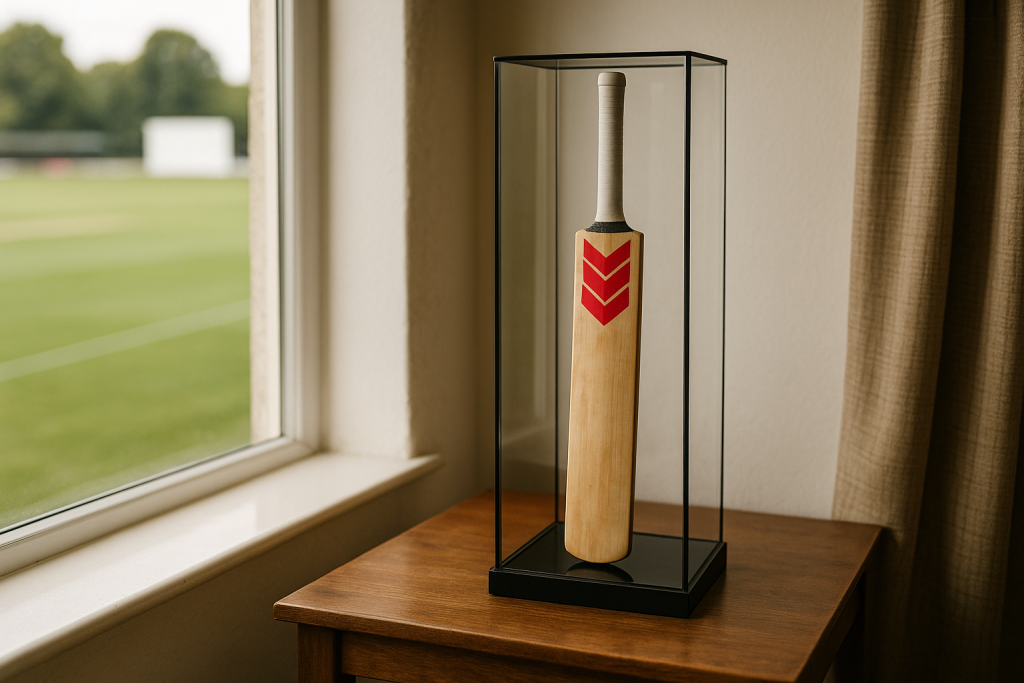
Cricket Bat Display Cases: How to Preserve and Showcase a Special Bat
21/08/2026A signed, presentation or milestone cricket bat deserves more protection than an ordinary storage spot in the garage or club storeroom. A well-chosen cricket bat display case helps protect the bat from dust, handling and accidental knocks while turning it into an attractive piece of sporting memorabilia.
The right case should fit the bat properly, hold it securely without placing damaging pressure on it and suit the room where it will be displayed. If the bat commemorates a century, premiership, retirement, fundraiser or important club achievement, an engraved plaque can also explain its significance.
Here is what Australian players, cricket clubs and collectors should consider when selecting and setting up a display case for a special bat.
Why Put a Cricket Bat in a Display Case?
Cricket bats are often preserved for reasons that go well beyond their original use on the pitch. A bat may represent:
- A player’s first century
- A high-scoring innings
- A premiership season
- A final match before retirement
- A club or school record
- A signed team presentation
- A charity auction or fundraising event
- A gift for a coach, captain or long-serving volunteer
- A connection to a notable match or player
Leaving the bat exposed makes it easier for dust to collect and increases the likelihood of it being handled, moved or knocked. A display case creates a physical barrier while allowing the item to remain visible.
For clubs, the case can also help turn an individual object into part of the organisation’s history. Displaying the bat alongside cricket trophies and other awards can create a coordinated recognition area in a clubhouse, school or sporting facility.
What to Look for in a Cricket Bat Display Case
Not every case will suit every bat. Dimensions, materials, mounting style and access all need to be considered before ordering.
Correct Internal Dimensions
Measure the actual bat rather than relying only on a standard size description. Cricket bats vary in overall length, blade width, handle shape and grip thickness.
Record:
- Overall bat length
- Widest point of the blade
- Maximum depth
- Handle and grip width
- Any attached memorabilia or raised signatures
- The space needed around the bat
The internal measurements of the case are more important than its external size. There should be enough clearance to place and remove the bat without scraping the blade, handle, grip or signatures.
If you plan to include a ball, cap, photograph, medal or engraved plaque in the same cricket bat display box, allow for those items during the initial measurements.
Horizontal or Vertical Display
A cricket bat can be displayed horizontally or vertically.
A horizontal case creates a wide presentation and often works well above a trophy cabinet, reception desk or clubhouse display. It also allows space beneath the bat for an engraved inscription.
A vertical layout uses less wall width and can suit narrow areas or a collection of several bats. However, the mounting points must hold the bat securely and prevent it from slipping.
Before choosing the orientation, measure the intended wall or cabinet space and consider how easily the display can be viewed.
A Secure Support System
A bat should be supported at appropriate points rather than held by one narrow bracket or squeezed tightly into place. The support should keep it stable without placing unnecessary pressure on the handle, blade, grip or signed areas.
Check whether the case:
- Supports the weight of the bat securely
- Prevents movement when the case is opened
- Keeps fittings away from signatures and inscriptions
- Allows the bat to be removed if necessary
- Avoids direct contact with rough or abrasive surfaces
For a particularly valuable or historically important bat, seek specialist conservation advice before selecting mounting materials or permanently attaching anything to the item.
Glazing and Visibility
A clear front allows the bat to be viewed while reducing direct contact. Depending on the product, a case may use glass or a clear acrylic-style material.
Consider clarity, weight, resistance to accidental impact and how easily the front can be cleaned. If the bat carries signatures or writing, reduced-UV glazing may be worth discussing; however, no transparent case should be treated as complete protection against fading.
The safest approach is still to position the display away from direct sunlight and intense heat.
Case Construction and Finish
The case should suit both the memorabilia and its surroundings. A timber-style frame may complement a traditional clubhouse or honour board, while a dark or neutral finish can create a contemporary presentation.
Inspect how the corners, backing, hinges and closures are constructed. If the display will be installed in a shared or publicly accessible area, consider whether a lockable case is appropriate.
The backing colour also affects visibility. A pale timber bat may stand out more clearly against a dark backing, while a signed section should have enough contrast to remain easy to see.
How to Prepare the Bat for Display
Preparing the bat carefully is just as important as choosing the case.
Confirm Whether the Bat Will Be Used Again
A match-used bat that will return to play has different requirements from a retired display item. Avoid permanent mounting methods if the bat may need to be removed.
If the item is intended solely for display, decide whether you want to preserve its match-used appearance or present it in a cleaner condition.
Remove Loose Surface Dust Carefully
Use a gentle approach and avoid aggressive cleaners. Products that alter the timber, labels, grip or ink may reduce the bat’s appearance or affect a signature.
If the bat is signed, do not clean across the writing unless you have reliable advice for the specific ink and surface. For rare or valuable memorabilia, professional assessment is safer than experimenting with household products.
Photograph the Bat
Take clear photographs of the front, back, handle, labels, signatures and any existing marks before installing it. These images create a useful condition record and can assist if the bat is moved or remounted later.
Record Its Story
Write down why the bat is important while the details are still known. Include the player, match, date, achievement and any relevant club information.
These details can be used for an engraved plaque and preserved in the club’s records. A display is more meaningful when future viewers understand the story behind it.
Personalising a Cricket Bat Display Box
Personalisation turns a case from a storage item into a recognition piece. An engraved plaque can identify the player, achievement and occasion without writing directly on the bat.
Possible inscription details include:
- Player’s name
- Club, school or association
- Match or competition
- Score or milestone
- Season or presentation date
- Opposition or venue, where relevant
- A short dedication
- Names of signatories
- Club logo
For example:
Presented to Jordan Taylor
In Recognition of 100 Runs
2025–26 Season
Wollongong Cricket Club
Only include details that can be verified. If the bat is part of a club archive, keep the wording concise enough to remain readable from a normal viewing distance.
NMTG’s in-house engraving services include trophy plates, stainless steel plaques, custom-cut metal plaques, laser engraving on timber and full-colour sublimation printing for plaques. The appropriate option will depend on the case, required finish, logo and amount of text.
Creating a Cricket Memorabilia Display
A case does not need to contain only the bat. A carefully planned presentation can include other items connected with the same achievement.
Suitable additions may include:
- A match ball
- A photograph
- A scorecard reproduction
- A cap
- A medal
- A team list
- A short written account of the match
- A club or school logo
Avoid overcrowding the display. The bat should remain the focal point, with supporting items arranged to explain its significance.
If the case is part of a larger club display, coordinate it with nearby honour boards, plaques and cricket trophies. Similar frame colours, plaque finishes and typography can help individual pieces feel like part of one collection.
NMTG’s engraving gallery can provide inspiration when considering plaque layouts and personalised presentation elements.
Where Should the Display Case Be Positioned?
Choose the location before finalising the style or orientation of the case.
A suitable display area should:
- Keep the bat away from direct sunlight
- Avoid excessive heat and damp conditions
- Be protected from frequent accidental contact
- Provide enough room for secure installation
- Allow the inscription to be read comfortably
- Avoid obstructing walkways, doors or equipment
- Be accessible for inspection and occasional cleaning
Clubrooms and schools should also consider who can access the case. A lockable design may be appropriate for public areas or valuable memorabilia.
When wall-mounting the case, make sure the fixing method is suitable for the wall type and the combined weight of the case and its contents. If unsure, use an appropriately qualified installer.
Common Mistakes to Avoid
Ordering from the Bat’s Standard Size Alone
Two bats described as the same playing size may still differ in handle, grip, blade and overall dimensions. Measure the individual bat.
Forgetting Space for the Plaque
Plan the engraved plate and any supporting memorabilia before choosing the internal case dimensions.
Mounting Over a Signature
Brackets or supports should not cover or rub against signatures, labels or important match marks.
Displaying the Bat in Direct Sunlight
A clear case does not prevent all effects of light and heat. Choose a more stable indoor position away from direct sun.
Permanently Fixing an Important Bat
Do not glue, screw through or otherwise permanently alter valuable memorabilia without understanding the consequences. A removable support system is generally more practical.
Adding Too Much Text
An engraving should tell the essential story without becoming difficult to read. Longer historical information can be kept in club records or presented on a separate panel.
Failing to Check Names and Match Details
Verify every name, score, date and club detail before approving the plaque. A commemorative display should provide an accurate record.
Ordering Considerations for Clubs and Collectors
Before enquiring about a display case or personalised plaque, prepare:
- The bat’s exact measurements
- Photographs of the bat and signatures
- Your preferred horizontal or vertical orientation
- The dimensions of the intended display area
- The wording required on the plaque
- A suitable club logo file, if required
- Details of any additional memorabilia
- Your presentation or installation date
NMTG’s frequently asked questions outline preferred artwork formats and explain how customers can supply logos and engraving details.
Because unusual sizes, additional memorabilia and installation requirements can affect the appropriate solution, confirm what is included before placing an order. Do not assume that every case is designed for the same bat dimensions or mounting arrangement.
Frequently Asked Questions
What size display case do I need for a cricket bat?
Measure the full length, width and depth of the actual bat, including the grip. Add enough clearance for safe placement, mounting supports, an engraved plaque and any other memorabilia.
Is a horizontal or vertical case better?
Neither is automatically better. Horizontal cases create a traditional wide presentation, while vertical cases use less wall width. The best option depends on the room, wall space and desired layout.
Can I display a signed cricket bat?
Yes, but avoid placing mounts over the signatures and keep the case away from direct sunlight. Do not clean signed areas without suitable advice for the ink and surface.
Can a plaque be added to the display?
An engraved or printed plaque can identify the player, club, match, milestone and date. Confirm the wording and available mounting space before finalising the display.
Can other memorabilia go in the same case?
Yes, provided the case has sufficient room and every item can be supported safely. A ball, medal, photograph or scorecard can add context, but the layout should not become overcrowded.
Showcase the Story Behind the Bat
The best cricket bat display case does more than hold a piece of sporting equipment. It protects the bat from everyday contact, presents it clearly and records why it matters.
Measure the bat carefully, choose a secure mounting system, plan the display location and keep the inscription accurate and concise. When these details are considered together, the finished case can become a lasting part of a player’s home, school collection or club history.
New Millenium Trophies & Embroidery assists players, clubs, schools and organisations in Wollongong, throughout the Illawarra and across Australia with trophies, plaques, custom awards and in-house engraving. Explore the NMTG trophy and award range or contact the NMTG team to discuss a personalised cricket memorabilia display.